
Niagara Falls Weather Guide
Niagara Falls is a year-round destination, but weather conditions can vary dramatically by season. From warm, misty summers to icy winter scenery, this guide explains what to expect throughout the year and helps you decide the best time to visit based on weather, crowds, and travel style.
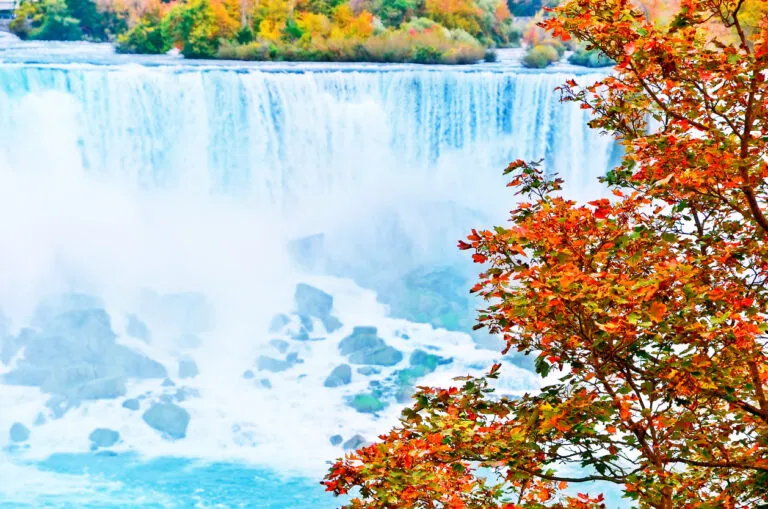
Niagara Falls Weather Overview
Niagara Falls has a four-season climate shaped by the Great Lakes, which means weather conditions can change quickly throughout the year. Temperatures, visibility, and even how the Falls feel up close vary significantly by season, especially due to wind and mist near the water.
Whether you’re planning a short visit or a multi-day trip, understanding seasonal weather patterns can help you choose the right time to travel and the most suitable itinerary, particularly if you’re coming from cities like New York or Toronto.
Niagara Falls Weather by Season
Spring (March – May)
Spring is a transition season at Niagara Falls. March can still feel like winter, with cold temperatures and occasional snow, while April and May gradually become milder. Melting snow increases water flow, making the Falls especially powerful and dramatic during this time.
Spring is ideal for travelers who prefer fewer crowds and vibrant natural scenery, but unpredictable weather means layered clothing is essential.
Summer (June – August)
Summer is the most popular season to visit Niagara Falls. Warm temperatures, long daylight hours, and fully operating attractions make it the peak travel period. The mist rising from the Falls provides some relief on hot days and enhances the overall experience.
Due to higher visitor numbers, many travelers choose Niagara Falls day tours or short multi-day trips to maximize sightseeing while minimizing planning.
Fall (September – November)
Fall brings cooler temperatures, lighter crowds, and colorful foliage around the Niagara region. September and October are especially popular for their balance of pleasant weather and improved visibility.
This season is well-suited for relaxed sightseeing, photography, and travelers who want a quieter experience without sacrificing access to major attractions.
Winter (December – February)
Winter transforms Niagara Falls into a striking frozen landscape. Snow, ice formations, and partially frozen waterfalls create a unique visual experience unlike any other season. Temperatures are cold, and some outdoor attractions may close temporarily.
Many visitors opt for guided winter itineraries or short winter tours to avoid driving in snowy conditions and to enjoy a more structured visit.
Niagara Falls Weather by Month
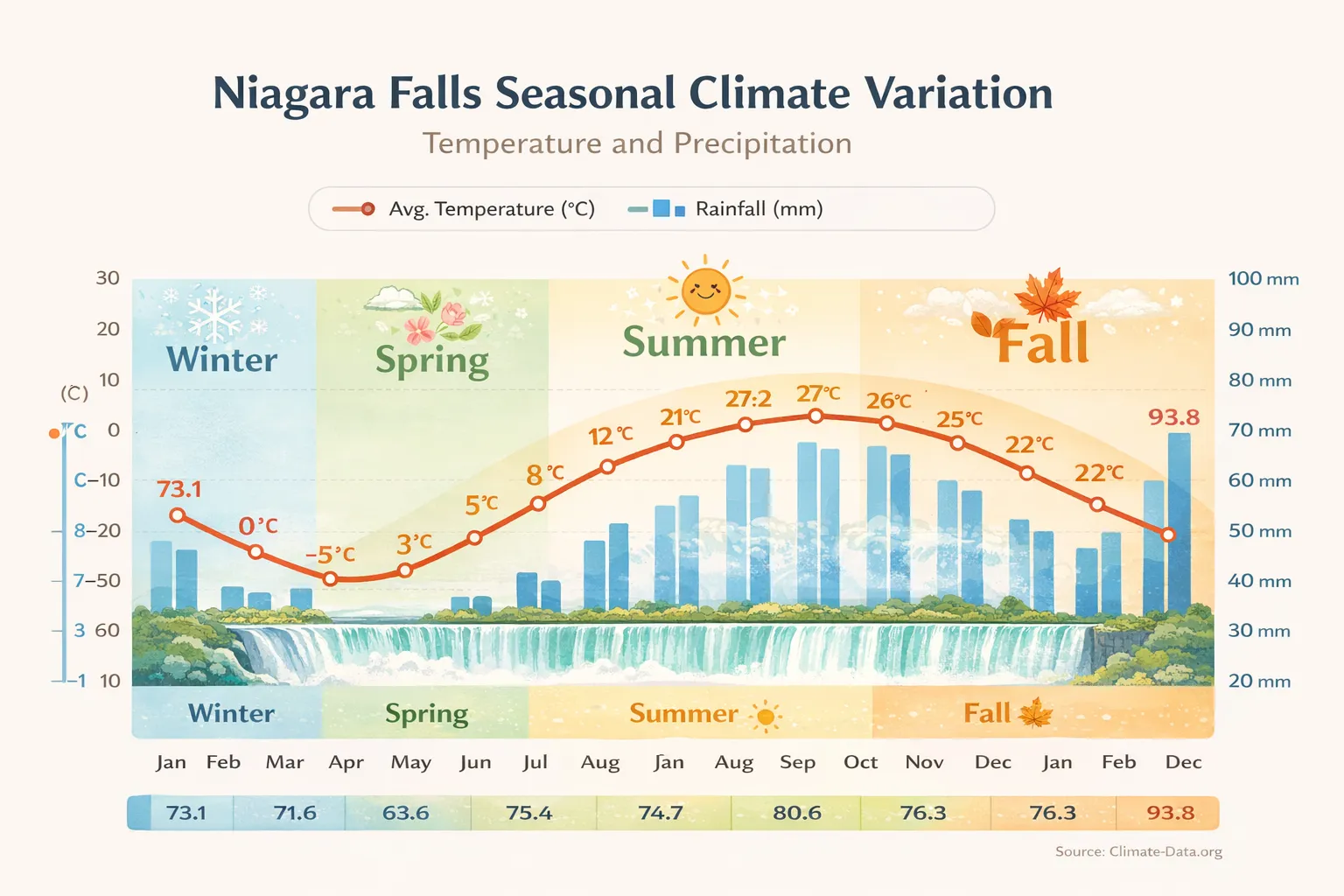
Weather at Niagara Falls can vary noticeably from month to month. Early spring tends to be cool and damp, summer months are warm and busy, fall is crisp and colorful, and winter is cold with regular snowfall.
Understanding monthly trends is helpful for travelers with limited time, especially when choosing between different Niagara Falls tour options based on comfort, crowd levels, and attraction availability.
Best Time to Visit Niagara Falls
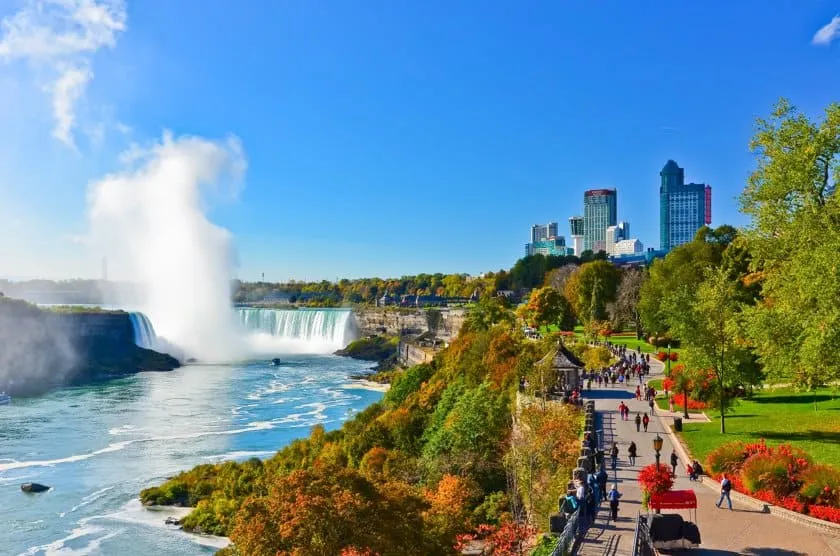
The best time to visit Niagara Falls depends on what you value most. Summer offers the fullest experience with all attractions operating, while late spring and early fall provide pleasant weather and fewer crowds. Winter appeals to travelers seeking a quieter visit and dramatic scenery.
There is no single perfect season—each time of year offers a different perspective on Niagara Falls.
What to Wear for Niagara Falls Weather
No matter the season, weather near Niagara Falls often feels cooler due to mist and wind. Comfortable walking shoes are essential year-round. In warmer months, light waterproof jackets are recommended, while spring and fall travelers should dress in layers.
Winter visitors should prepare for icy walkways with insulated clothing, gloves, and waterproof boots.
Does Weather Affect Niagara Falls Tours?
Most Niagara Falls tours operate in a wide range of weather conditions. Rain, mist, or light snow rarely stop tours, and some weather conditions can even enhance the experience by increasing mist and water flow.
For travelers departing from New York or Toronto, guided tours are often a convenient choice during colder or unpredictable seasons, as transportation and scheduling are handled in advance.